The meter and the monitor answer different questions
A monthly electricity bill tells you how much energy crossed the utility meter during a billing period. Many Ontario utility accounts also show usage by hour, day or month. That history is an excellent starting point because it uses the meter that is already there. A separate home monitor can add a near real time view of the house, but its readings should still be compared with the utility record rather than treated as a replacement for billing data.
Whole house monitoring usually measures power at the service conductors. Some systems add sensors for selected circuits, the solar inverter or the battery. Those extra points matter: a single total can show that use rose at 6 p.m., but it cannot reliably prove which appliance caused the rise.
Kilowatts are the speed; kilowatt hours are the total
Power in kilowatts, written kW, describes how quickly electricity is being used right now. Energy in kilowatt hours, written kWh, describes how much was used over time. If a load averages 1 kW for one hour, that is 1 kWh. The same total could come from a 2 kW load for half an hour. This distinction becomes important when comparing a solar array, a battery and a household bill.
A live graph is good at revealing short spikes, such as a kettle or compressor starting. A weekly or seasonal graph is better for decisions about heating, cooling and vehicle charging. Choose a view that matches the question instead of collecting every possible number.
What the sensors do and do not know
A current transformer, commonly called a CT, senses current flowing through a conductor. A monitor combines that reading with electrical information to estimate power. Placement, direction and configuration matter, especially where solar can send electricity toward or away from the grid. A badly configured monitor may reverse import and export or report totals that do not reconcile.
Some products infer appliance use from the shape of whole house data. Treat these guesses as clues, not proof. A dedicated circuit sensor can be much more useful for a large load such as an electric vehicle charger, heat pump or water heater. Before buying, ask how many circuits can be measured and whether raw data can be exported.
A simple monitoring plan
Start with the last year of utility bills or account data. Mark the seasons, unusual months and any new equipment. Then decide what extra information would change a decision: the overnight baseline, the heat pump circuit, solar output, or battery charging. Monitor those points first. A useful dashboard should show a clear time range and the difference between grid import, solar production, battery flow and home load.
Check that the numbers balance approximately. For example, home use at one moment is supplied by some combination of solar, battery discharge and grid import. Small differences can arise from sampling and losses, but persistent large contradictions deserve investigation. Keep the labels understandable to everyone in the household.
Installation and privacy belong in the plan
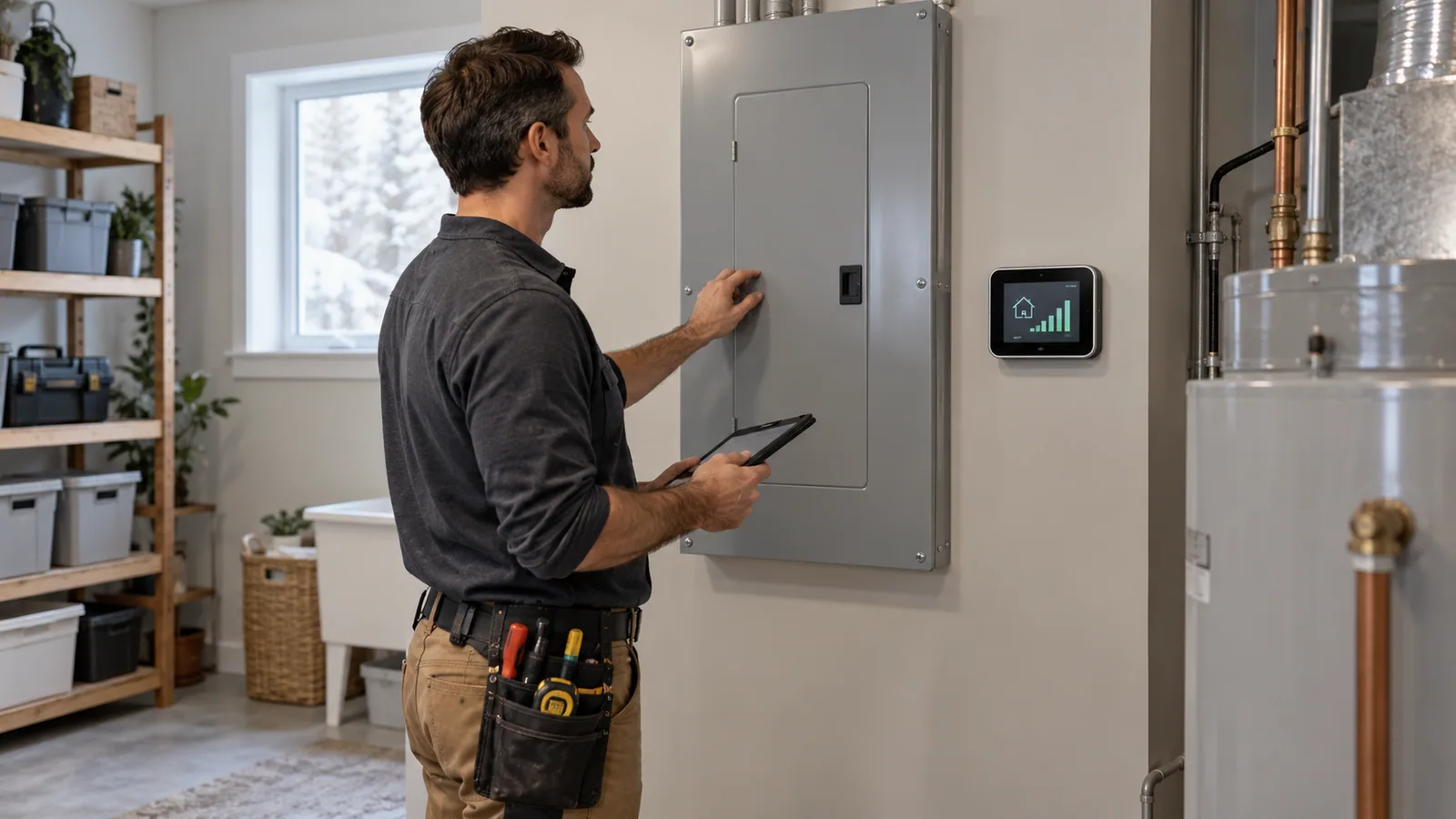
A monitor that touches the service panel is electrical work. An energized panel can be hazardous even when the front cover is removed only briefly. In Ontario, a business hired for electrical work in a home must be a Licensed Electrical Contracting Business, subject to the applicable exemptions. Have the contractor confirm any required ESA notification and inspection rather than treating a clip on sensor as a harmless gadget.
Energy data can reveal routines, occupancy and when large appliances run. Check whether the dashboard needs a vendor cloud account, how long data is kept, who can see it and what happens if the company stops supporting the service. Local access and export options may matter more than an elaborate phone animation.
CHECK THE SOURCE
Official reading
Programs, equipment and requirements can change. These sources provide current technical and Ontario program details to check before a project.
This is a planning guide, not an installation procedure or a savings guarantee. Have the roof, electrical service, distributor connection and battery design assessed for the actual property. Reviewed 12 October 2026.