
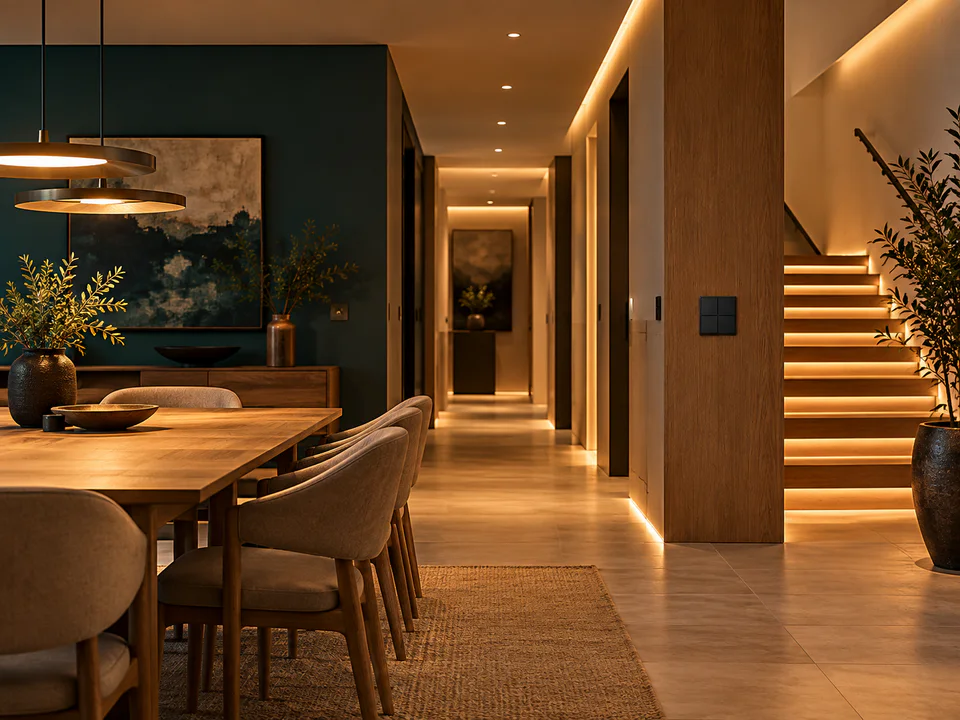
Use colour temperature deliberately
Warm white often feels relaxed in living areas; cooler white may help a task surface look crisp. The best choice also depends on surrounding daylight and materials. Avoid changing colour so dramatically that the room feels unpredictable.
Set a small number of states
A morning, task and evening state is usually easier to use than a long list of nearly identical scenes. Keep brightness and colour temperature together in each state, then allow manual adjustment. A slider is useful for discovery, but people should not need to tune it every day.
Check colour quality
Colour temperature describes the appearance of white light, not how accurately objects appear. Compare actual fixtures in the room, especially around food, clothing and artwork. The demo illustrates visual possibilities; it does not model a specific lamp or lighting specification.
QUESTIONS TO TAKE INTO A PROJECT
Before you choose a product
- What work needs clear visibility?
- Which evening scene is comfortable at low brightness?
- Have the actual lamps been tested in the room?
This guide is a planning concept, not a product recommendation or a promise of service availability. Site conditions and applicable requirements should be checked for each project.