
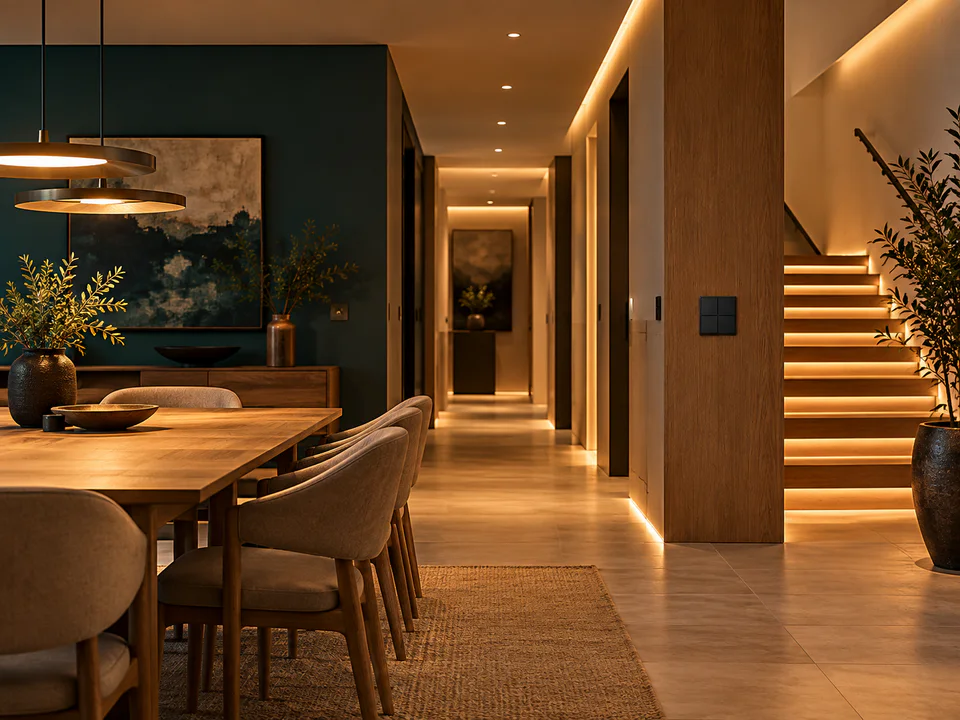
Light the path, not the whole floor
Identify the route from bedroom to bathroom or from entry to stairs. A low output at floor or wall level can guide movement without switching every overhead fixture on. Think about reflective surfaces and sightlines from beds.
Use sensible timing
A motion event should turn the right light on long enough to cross the space, then fade or turn off after a practical interval. If someone is still in the room, another input or manual hold may be needed. Test with different walking speeds and with doors open and closed.
Keep a manual option
A visitor should still understand the switch. Motion control should not leave a person in darkness because a sensor cannot see them. Treat stairs and exits conservatively and follow applicable electrical and building requirements for the installation.
QUESTIONS TO TAKE INTO A PROJECT
Before you choose a product
- Where can the sensor actually see movement?
- How long should the path remain lit?
- What happens if sensing fails?
This guide is a planning concept, not a product recommendation or a promise of service availability. Site conditions and applicable requirements should be checked for each project.